Choosing incontinence protection should make daily life easier, not create another difficult decision. If you are caring for a parent in Lagos, helping a partner in Abuja, or managing bladder leaks yourself, you may be wondering whether reusable or disposable adult incontinence pants are the better choice.
Both options can work well. The right choice depends on how often leakage happens, the level of absorbency needed, your washing facilities, budget, mobility and the heat where you live. This guide breaks down the practical differences so you can choose with confidence.
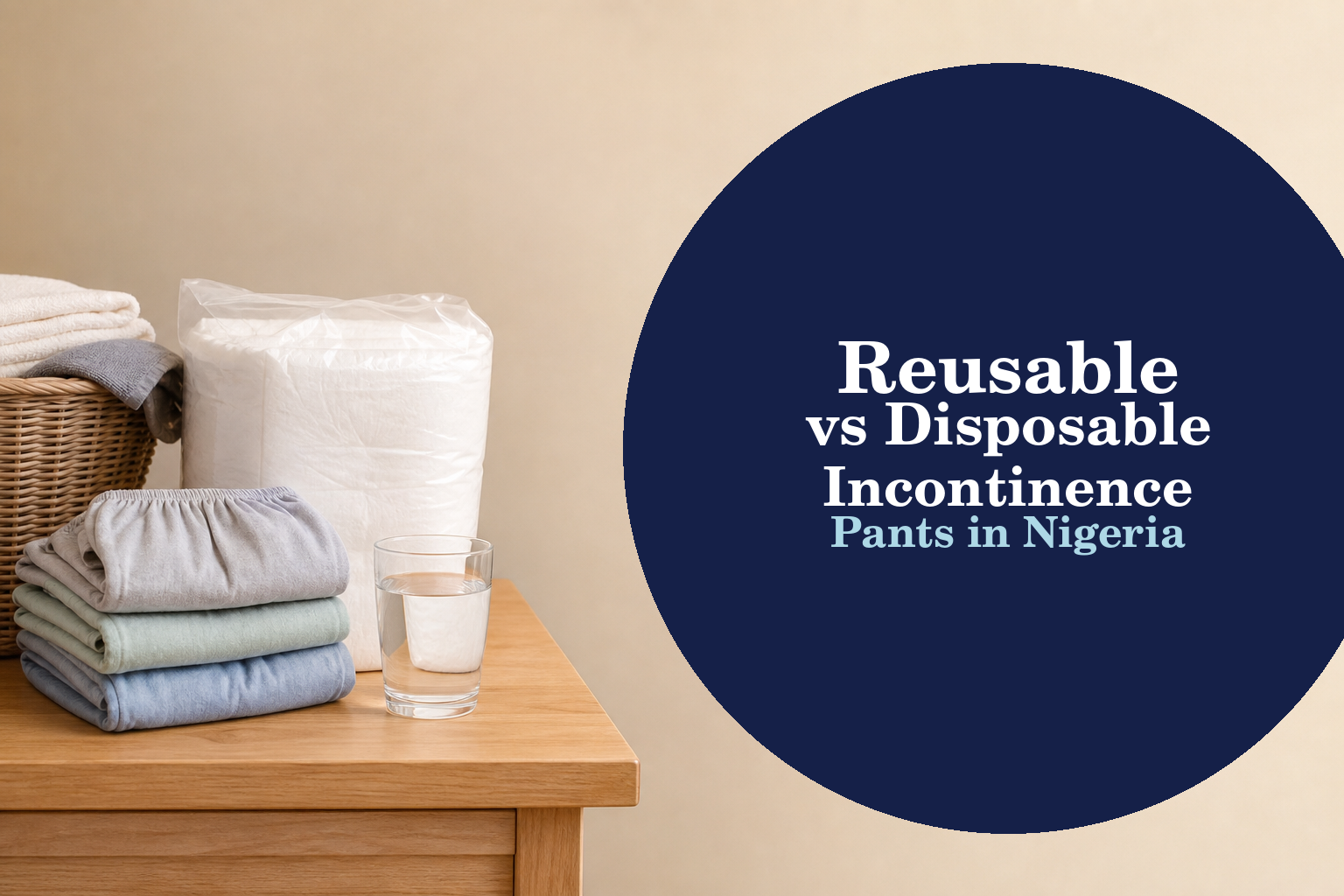
Disposable pants are worn once and thrown away after use. They usually have a soft, underwear-like shape, an absorbent core and elastic around the waist and legs. They are useful when you need reliable protection without carrying wet laundry home.
Reusable pants are washable garments designed to be used repeatedly. Some are made with an absorbent inner layer, while others are waterproof underwear intended to hold a separate washable or disposable insert. Always check the product details, because “reusable” does not automatically mean it can hold a large amount of urine.
Reusable protection can cost less over time if you have enough pairs to rotate and can wash and dry them properly. However, remember the full cost: the initial purchase, detergent, water, electricity or transport to a laundrette, and replacement when the fabric loses its absorbency.
Disposable pants cost more each time you use them, but the price is predictable and there is no washing afterwards. Online Nigerian listings can change quickly because of exchange rates, import costs, pack size and delivery fees. Compare the price per pant, not just the price on the front of the packet. A cheaper pack may contain fewer pants or offer less absorbency.
In hot, humid weather, trapped moisture can leave skin sore. This matters whether you are travelling across Lagos traffic, sitting through a long church service, or caring for someone who spends much of the day in bed.
For light leaks when coughing, laughing or rushing to the toilet, a washable pair or light disposable pant may be enough. For frequent or heavy leakage, overnight use, or someone who cannot reach the toilet independently, choose protection that is specifically labelled for higher absorbency and check the size guide carefully.
Reusable underwear often works best for small leaks or as a backup. Disposable pants are usually more practical when you need a known absorbency level, especially during a long journey or when changing someone away from home. No product replaces medical advice, and continuing leaks deserve assessment by a doctor or continence specialist.
Reusable protection needs a routine. Rinse or store used garments as directed, wash them thoroughly, and dry them completely before wearing again. In the rainy season, or in a crowded home without reliable outdoor drying space, this can become stressful. Never leave damp garments in a closed bucket or bag for long periods.
Disposables are simpler for hospital visits, flights, road trips and days when the usual caregiver is unavailable. Carry spare pants in an opaque bag, along with wipes, a change of clothing and a small disposal bag. This is useful for a Sunday service, a naming ceremony or a long inter-city bus journey.
Before buying, measure the waist and hips and follow the manufacturer’s size chart. Check the absorbency description, fastening or tear-away design, odour control, leg guards and whether the product is intended for day or night use. If buying online, confirm the pack count, delivery charge and return policy.
Start with a small quantity if you are trying a new style. A product that looks excellent on paper may not suit the wearer’s shape, movement or skin. Comfort matters because the best protection is the protection someone will actually wear.