Mummy is leaking again. Daddy does not want to leave the house anymore. I do not know how to bring this up with my father.
If you are caring for an elderly parent or relative with bladder control issues, you know how challenging it can be, emotionally, practically and socially. In Nigeria, where extended family care is the norm and many elderly parents live with their children, incontinence care often falls on family members with little guidance or support.
This guide is here to help.
Understanding the Scale of the Challenge
Urinary incontinence affects a significant number of elderly people around the world. The National Institutes of Health reports that UI is especially common among older individuals, with rates increasing with age (StatPearls, 2024). In Nigeria, where life expectancy is rising and the elderly population is growing, more families are facing this challenge than ever before.
Yet research shows that in many Nigerian communities, incontinence in older people is dismissed as just what happens when you get old. This leads to unnecessary suffering and isolation for elderly relatives who could be living more comfortably with proper care and products.
Step 1: Have the Conversation with Compassion
This is often the hardest step. In Nigerian culture, discussing bodily functions with elders can feel disrespectful. But avoiding the topic does not make it go away. It makes your parent suffer in silence.
How to Start the Conversation
- Choose a private, calm moment. Not in front of other family members or during a crisis.
- Frame it as concern, not criticism. Say “I have noticed you seem uncomfortable lately and I want to help” rather than “You keep having accidents.”
- Blame the condition, not the person. “This is a medical issue. It is not anyone’s fault. Many people experience it and there are solutions.”
- Use a doctor as an ally. “Let us ask the doctor about it together at your next check-up” can make the conversation feel medical rather than personal.
- Be patient. Your parent may feel ashamed, defensive or in denial. Give them time to process. Revisit the conversation gently.
Step 2: Get a Medical Assessment
Before buying any products, take your parent to see a doctor. Incontinence can have many underlying causes, some of which are easily treatable:
- Urinary tract infections (UTIs) Common in older people and easily treated with antibiotics.
- Enlarged prostate (in men) Medication or minor procedures can greatly improve symptoms.
- Diabetes Uncontrolled blood sugar increases how often you need to urinate.
- Medication side effects Some blood pressure drugs and diuretics (water pills) cause urgency.
- Constipation A common cause of incontinence in older people because of pelvic floor pressure.
A proper diagnosis means you are treating the right problem, not just masking symptoms.
Step 3: Choose the Right Products for Your Parent
The right product depends on your parent’s mobility, activity level and the severity of their incontinence:
For Mobile Parents (Still Walking, Going Out, Attending Church)
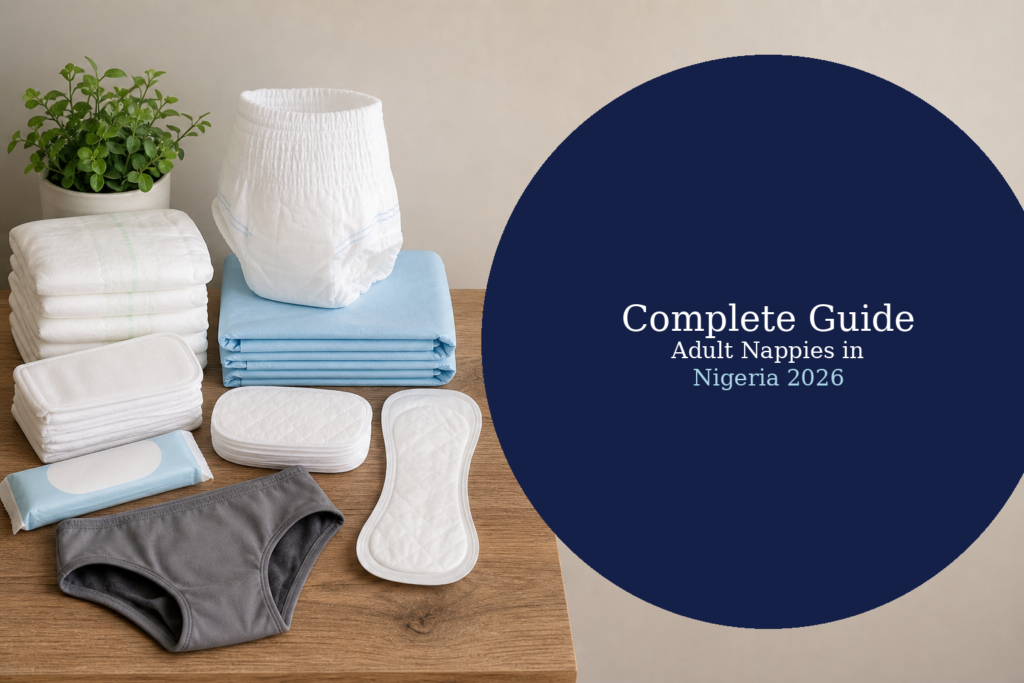
- Protective underwear (pull-up style) Such as Dignity Pants or Freedom Underwear. They can put them on by themselves like regular underwear. Discreet under clothes.
- Incontinence pads For mild leakage. Worn inside regular underwear.
For Less Mobile or Bedridden Parents
- Tape-on briefs Highest absorbency. Easy for caregivers to change without moving the person fully.
- Bed underpads Waterproof absorbent sheets that protect the mattress and reduce laundry.
- Waterproof bed protectors Reusable options for long-term care.
Step 4: Set Up a Daily Care Routine
Consistency prevents skin problems and makes care manageable:
- Change regularly. Every 3 to 4 hours during the day, or immediately after a bowel movement. Never leave a wet product on overnight unless it is designed for that purpose.
- Clean gently. Use a soft cloth, warm water and a mild, fragrance-free cleanser. Avoid harsh soaps that dry out ageing skin.
- Dry thoroughly. Pat dry, do not rub. Moisture is the enemy of healthy skin.
- Apply barrier cream. A zinc oxide cream or petroleum jelly protects against irritation.
- Let the skin breathe. A few minutes without protection after changing allows the skin to air out.
Step 5: Manage Odour Effectively
Odour is one of the biggest worries for families caring for elderly parents, especially in multi-generational homes. Here is how to manage it:
- Use quality products with odour control. Modern incontinence products contain neutralisers that trap and remove odour, not just mask it.
- Change and dispose of products promptly. Wrap used products in a plastic bag (nylon) and put them in a covered bin. Dispose of them daily. Do not let them build up.
- Ventilate the room. Good airflow reduces lingering smells.
- Consider a dehumidifier. In humid Nigerian weather, moisture in the air can make odours stronger.
- Use odour-neutralising sprays. Enzyme-based sprays, which you can find in pharmacies, break down odour-causing compounds at the source.
Step 6: Take Care of Yourself Too
Caregiver burnout is real. The National Association for Continence (NAFC) stresses that caregivers need support networks, regular breaks and respite care to keep going effectively.
- Share the load. In Nigerian families, caregiving often falls on one daughter or daughter-in-law. Rotate responsibilities with siblings or other relatives.
- Join support groups. Online communities for caregivers of elderly parents can offer emotional support and practical tips.
- Acknowledge your feelings. Frustration, guilt and exhaustion are normal. You are not a bad person for feeling them.
- Seek professional help. If care becomes too much, think about hiring a home health aide, even just part-time.
Key Takeaways
- Start with a compassionate conversation. Approach with love, not criticism.
- Get a medical assessment first. Treatable causes are common in older people.
- Choose products based on mobility: pull-up underwear for active seniors, tape-on briefs for bedridden care.
- Set up a daily hygiene routine to prevent skin breakdown and infections.
- Control odour through quality products, prompt disposal and good ventilation.
- Do not neglect your own wellbeing as a caregiver. Share the load and seek support.
Sources: StatPearls/NIH (2024), National Association for Continence (NAFC) Caregiver Guide, The Caregiver Action Network, AgingCare.com Incontinence Guide